
We’ve written about converged IAM before. Here’s why it’s worth another look.
Since then, the word has only gotten louder, and less precise. Every pitch deck has it. Every homepage banner has it. The more a word shows up everywhere, the less it tells a buyer anything, it stops being a description and starts being noise you have to filter out before you can evaluate anything real.
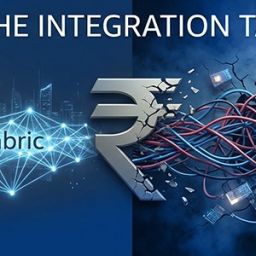
Here’s what’s actually new: some vendors are starting to admit this themselves, just not about themselves. A few companies in this space now draw their own line between what they call “converged” and what they call “unified,” where “unified” is their word for products that were bought and bolted together and, in their own words, “only share a brand name.” Another markets itself as “natively built,” specifically to separate itself from what it calls an “ordinary converged identity solution… built in parts.” When competitors start publicly correcting each other’s use of the same word, that’s a sign the word broke.
So here’s the plain version of what it should mean, and a way to test it.
A house built from one blueprint, or a house with three additions
A house built from a single blueprint has one electrical panel, one plumbing system, and wiring planned to work together from the start. Now picture a house with three additions over twenty years, each by a different contractor. It still looks like one house from the street. Walk inside and it isn’t: a second electrical panel nobody remembers, plumbing that doesn’t match between wings. Several houses stapled together, because that’s what it is.
That’s the distinction we draw between converged and integrated, not over semantics, but because of what follows from it.
Not every “converged” platform is actually converged
Identity and access management covers seven real jobs: who can log in, who has access to what, protecting the most powerful accounts, customer logins, cloud access, spotting risky behavior, and now the software and AI systems that need access too.
Historically, companies bought each as a separate product and connected them after the fact. That’s integrated. “Converged” has become the buzzword every vendor reaches for. Here’s how we see the meaning behind it: one system, built together from the start, where those seven jobs were never separate. The real question isn’t whether a vendor says “converged.” Everyone does. It’s whether the whole thing was built together from day one, or bolted on after the fact.
The governance problem
Governance’s job is knowing who has access to what, at all times, and proving it. Easy with one system. Hard across seven separate products, each tracking access its own way.
The test: if someone’s account got flagged as risky a minute ago, how many of your seven systems actually know that yet? Usually just the one that flagged it. Seven out-of-sync versions of the truth, and somebody has to manually match them up before anyone can trust it.
The identity risk problem
It’s the same failure as an employee who only wears one hat. A product person who never hears from sales builds in a vacuum, not because they’re bad at their job, but because nobody told them what other departments were seeing.
Identity risk works the same way: what a specific person or piece of software is doing with the access they’ve been given. One unusual login alone is easy to shrug off. It only becomes meaningful next to other signals: an odd login, then access somewhere unusual, then an unusual amount of data moving right after. None looks alarming alone. Together, in the same few minutes, that’s an active problem.
Catching it means all seven parts comparing notes as it happens, which only works if the whole thing was built as one system from the start.
Two things that can both be called “converged”
Bought and bundled (“converged” in name only) | Actually built as one |
| Separate products, bought over time, given one brand. Information scattered, matched up after the fact, if ever. Spotting risky behavior depends on syncing between systems. | Built together as a single system from the start. Information lives in one place, shared by every part. Spotting risky behavior happens in real time. |
The bottom line
Every vendor says “converged.” That word, by itself, tells you nothing. Ask one question instead: was this built as one system from day one, or bolted together and rebranded?
One answer gives your team a complete picture in one place. The other gives them seven partial pictures wearing the same logo. And converged doesn’t mean all-in, all at once, either. You can start with just one of the seven jobs.
What matters is what happens when you add the second one. On a platform built as one system, turning on the next capability is exactly that, turning it on, because it already shares the same underlying system as the one you started with. On a platform that was bought and bolted together, adding the next piece usually means a new integration project, new connections, new syncing, built from scratch, same as the first one was. Same starting point. Very different second step.
Have a question about your own environment? Talk to our team