

Every vendor calls their platform “converged.” Here’s the real test for telling a system built as one from day one apart from one bolted together.
Converged IAM
Read Converged IAM related blogs.

Organizations spent years learning how to manage Shadow IT.
Unsanctioned applications. Unknown cloud services. Departments adopting technology faster than governance teams could keep up.
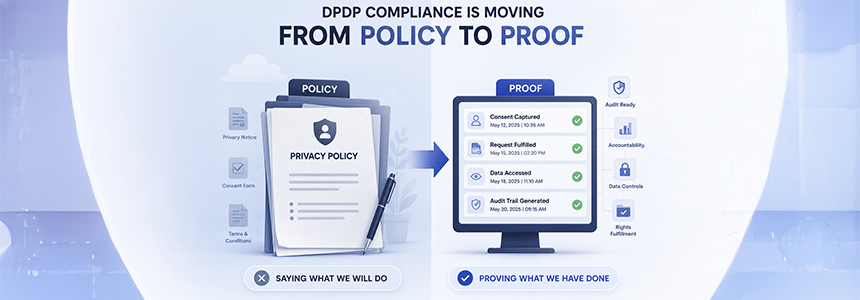
For years, privacy compliance was largely a documentation exercise.
Organizations focused on privacy policies, consent forms, terms of use, and legal disclosures. The assumption was simple: if the right documents existed, compliance would follow.
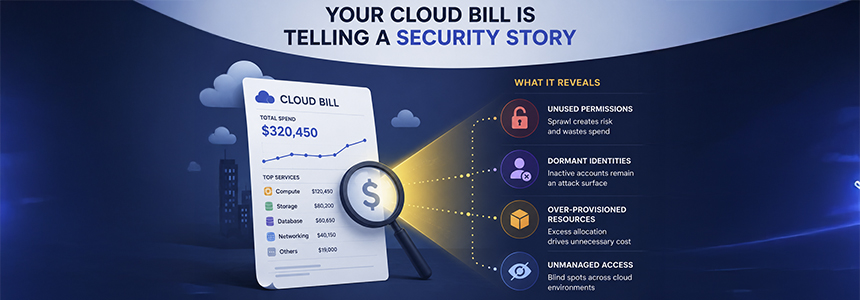
Cloud waste and cloud risk are often symptoms of the same problem: lack of governance.
Most organizations look at their cloud bill for one reason.

Everyone is talking about consent management.
Cookie banners. Privacy notices. Consent workflows.
But the harder part of DPDPA is not consent. It is correction, completion, and updating of personal data.

Today, enterprises are operating in an environment where identity, data, cloud, and AI are all expanding at once. Each new platform promises speed. Each new integration promises flexibility. But the real outcome is often more fragmentation, more duplication, and more blind spots.

Every vendor claims “converged IAM.”
Unified platform. Single pane of glass. Integrated governance.
Then you ask: “Can it govern AI agents?”
Silence.
