
There’s a conversation happening in boardrooms across India right now, and most sales teams are missing it entirely.
Enterprise buyers – especially in BFSI, healthcare, and e-commerce – have quietly added a new item to their vendor evaluation checklist. Alongside pricing, integration complexity, and support SLAs, procurement teams are now asking: “Are you DPDPA compliant? And can you prove it?”
This is not a compliance question. It is a revenue question.
I have spoken with dozens of CXOs over the last six months. The pattern is consistent: deals that looked closed are stalling at legal review. Not because the product failed the evaluation, but because the vendor could not demonstrate that their data handling practices met India’s Digital Personal Data Protection Act requirements. One contract, worth ₹2.8 crore, paused for eleven weeks because the vendor could not produce a consent audit trail.
Eleven weeks.
In enterprise sales, eleven weeks is not a delay. It is a dead deal wearing a pending status.
The CROs who are winning in this environment are not necessarily selling better products. They are selling provably compliant products. They have DPBI-defensible consent records, multilingual privacy notices, and a breach response process that meets the 72-hour notification window. When legal asks the question, the answer is ready – not assembled.
This is exactly what we built VISHWAAS to deliver. Not compliance as a documentation exercise, but compliance as operational proof – cryptographically signed consent records, automated rights fulfilment, and audit-ready evidence generated in under five minutes.
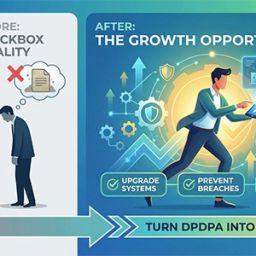
The enterprises that make DPDP compliance a selling point – not a box to check – will close faster, retain longer, and build the kind of customer trust that compounds.
The question is not whether compliance is your problem. It is whether you see it as an asset yet.