
Everyone is talking about consent management.
Cookie banners. Privacy notices. Consent workflows.
But the harder part of DPDPA is not consent. It is correction, completion, and updating of personal data.
That sounds simple on paper. In practice, it is one of the most operationally demanding obligations in the law.
If a customer asks you to update a phone number, email address, or shipping detail, that change should not live in one system and lag in five others. It needs to move across the entire data stack, consistently and quickly, with proof that it happened.
For large enterprises, this is a systems problem.
For SMEs, it can become a survival problem.
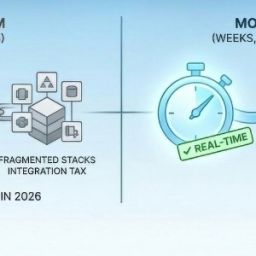
Most businesses do not run on one clean database. They run on a patchwork of CRM tools, billing platforms, support systems, analytics tools, email marketing software, payment providers, and shipping integrations. Data is duplicated, copied, transformed, and stored in multiple places. That makes a simple correction request far more complex than it appears.
The real challenge is not receiving the request.
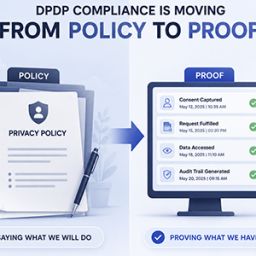
It is knowing where the data lives, updating every instance, verifying completion, and keeping an audit trail.
That is why correction rights deserve more attention than they get. Consent is often a front-end compliance exercise. Correction is an ongoing operational obligation. It touches data quality, system architecture, records management, and customer trust.
The organizations that handle this well will not just be more compliant. They will also have cleaner data, fewer support issues, and better operational control.
The organizations that ignore it will discover that privacy compliance is not only about what you collect. It is also about how fast you can correct what you already hold.
That is the part of DPDPA most teams are still underestimating.