
When we talk about data protection regulation, the conversation almost always defaults to risk. Penalties. Enforcement. Liability. What happens if you get it wrong.
I want to reframe that.
India’s Digital Personal Data Protection Act is not just a regulatory obligation — it is the first time Indian businesses have been legally required to earn the trust of the people whose data they process. That is a different kind of conversation. And it opens a different kind of opportunity.
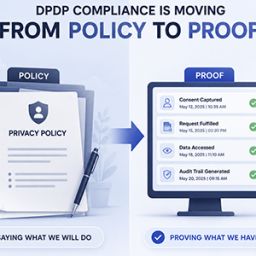
The enterprises I speak with regularly are at an inflection point. Their customers are becoming aware that data rights exist. Their boards are asking about DPBI exposure. Their DPOs are being asked to demonstrate compliance, not just describe it. The question has shifted from “are we compliant?” to “can we prove it?”
These are not the same question.
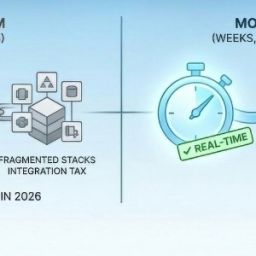
Demonstrating compliance means producing evidence under pressure — in a DPBI proceeding, a procurement review, or a board meeting — and doing it in minutes, not weeks. It means showing a cryptographically signed consent record, a completed rights request audit trail, and a breach response that met its 72-hour deadline. It means having the infrastructure to back the claim.
This is why we built VISHWAAS the way we did. Not as a documentation system. As an operating layer — one that makes compliance operational, enforceable, and provable across all twelve obligations the DPDPA creates.
The organisations that treat DPDP compliance as an infrastructure investment, not a legal formality, will find that it pays back. In faster enterprise sales cycles. In procurement approvals that do not stall. In customer relationships built on something verifiable.
Trust is not a feeling. In the DPDPA era, it is a proof.