
Every new tool you add creates gaps attackers can exploit. It’s time to rethink cybersecurity from the ground up
Why cybersecurity must become infrastructure
Every mature industry runs on foundational infrastructure.
Banks rely on core banking infrastructure like Finacle. Manufacturers run on ERP systems like SAP. The internet itself runs on protocols that ensure continuity and trust.
Cybersecurity has none of this.
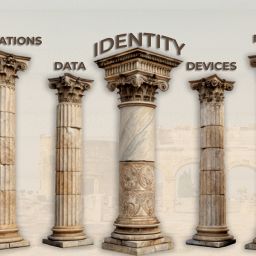
Security isn’t a collection of tools you bolt together. There should be a foundational infrastructure which unifies all tools, technologies and applications. If you’re still patching tools and hoping for safety, you’re asking to be breached.
When breaches hide in noise and blind spots, detection, containment, and recovery all take far longer than anyone expects. That’s not security. That’s survival.
It’s time to stop treating cybersecurity as a collection of tools and start treating it as infrastructure.
The problem with patchwork security
Tool sprawl is the silent epidemic of modern cybersecurity.
According to Gartner organizations now use on average 45 cybersecurity tools.
Complexity, not hackers, has become the real enemy. When every system runs its own logic, visibility fades. When policies are scattered, compliance weakens. When integration fails, trust erodes. The result? A fragile defense surface that’s easy to overwhelm and hard to recover.
It is still a fragmented marketplace of tools rather than a unified backbone of resilience.
That’s the gap Cybersecurity-as -an-Infrastructure (CSaI) aims to fill, by shifting from reactive tool deployment to structural defense design.
Infrastructure is something you build once, depend on daily, and evolve continuously.
It’s not a dashboard you monitor, it’s the layer everything else rests upon.